PCC1 and the grape-seed longevity pill: what the study actually showed
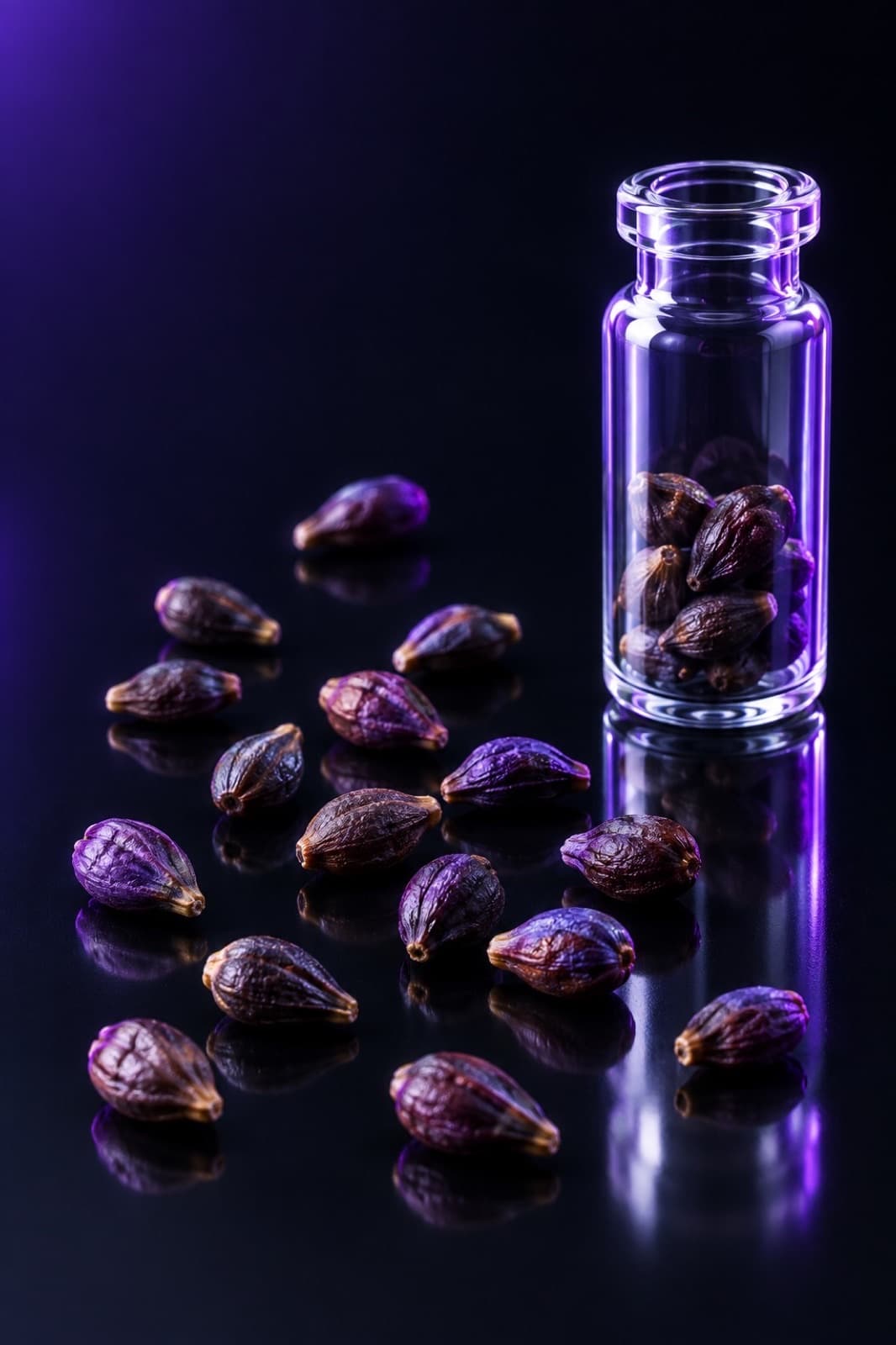
PCC1 is a natural compound from grape seeds that can kill off old, worn-out cells that linger in the body and cause inflammation. In a good-quality 2021 study, injecting it into elderly mice made them live about 9% longer and stay functional rather than just declining for longer. That is genuinely interesting research. But the mice were injected, not given capsules, and no proper human trial has been finished — so the pills now being sold on the strength of it are running ahead of the evidence.
PCC1 (procyanidin C1) is a flavonoid found in grape seed extract that acts as a senolytic — at higher concentrations it selectively kills senescent "zombie" cells, and at lower concentrations it suppresses the inflammatory signals they release. A 2021 study in Nature Metabolism found that giving it to already-old mice extended their overall lifespan by 9.4% and cut mortality hazard by 65%. Two details are routinely dropped from coverage: the mice received it by injection into the abdominal cavity every two weeks, not as an oral capsule, and the widely quoted "64%" figure refers to remaining lifespan after treatment started, not total lifespan. Human evidence currently consists of one 17-person preprint that has not completed peer review.
- The source paper is credible: Xu et al., Nature Metabolism 2021, with senior co-authors Judith Campisi (Buck Institute) and James Kirkland (Mayo Clinic) — two of the most established names in senescence research.
- Dosing in the lifespan experiment was 20 mg/kg by intraperitoneal injection, once every two weeks, started when mice were already 24–27 months old (roughly equivalent to a human in their seventies or eighties).
- Two different numbers circulate: 9.4% longer overall lifespan, and 64.2% longer median post-treatment lifespan. Both come from the same experiment. The second is larger because the denominator is smaller.
- Treated mice did not simply spend longer in decline — physical function in the final two months of life was not significantly worse than controls, which is the healthspan result that makes the paper interesting.
- No completed, peer-reviewed human trial exists. A 17-person preprint (ages 50–86) reported reductions in senescence markers over three days, but it is uncontrolled, unpublished, and far too small to act on.
What PCC1 is and how it is supposed to work
Senescent cells are cells that have stopped dividing but refuse to die. They accumulate with age and secrete a mix of inflammatory proteins known as the senescence-associated secretory phenotype, or SASP — which is thought to drive a meaningful share of age-related tissue dysfunction. Compounds designed to clear these cells are called senolytics.
PCC1 is a flavonoid, one of the active components of grape seed extract. The 2021 paper found it via a screen of natural products, and reported a dose-dependent split in how it behaves: at low concentrations it appears to suppress SASP formation without killing the cells, while at higher concentrations it selectively kills senescent cells, apparently by driving reactive oxygen species production and mitochondrial dysfunction in cells already under stress. Healthy cells were largely spared.
The mouse study, in the detail the headlines skip
What the lifespan experiment actually involved
| Parameter | What the study did |
|---|---|
| Species | Mice — no primate or human lifespan work exists |
| Age at treatment start | 24–27 months, i.e. already old; this was a late-life intervention, not lifelong dosing |
| Route of administration | Intraperitoneal injection — into the abdominal cavity, bypassing the digestive tract entirely |
| Dose and frequency | 20 mg/kg, once every two weeks (intermittent, not daily) |
| Overall lifespan effect | 9.4% longer |
| Post-treatment lifespan effect | 64.2% longer median remaining lifespan from the day treatment began |
| Mortality hazard | Reduced by 65.0% (P < 0.0001) |
| Physical function near end of life | Not significantly lower than controls in the final two months — extra time was not simply extra decline |
What exists in humans
As of September 2026, there is no completed, peer-reviewed, placebo-controlled human trial of PCC1 for any longevity endpoint. What exists is a preprint: 17 participants aged 50 to 86, given a short course, with reported median reductions in the senescence marker p21 (around 47%), SA-β-gal (around 37%), and several SASP factors including IL-6, IL-8, VEGF and TGF-β1, measured over three days.
Taken at face value that is a directionally encouraging mechanistic signal. Taken at the standard this site applies, it is close to the weakest form of human evidence there is: seventeen people, no control group, three days, not yet through peer review, and produced in connection with the company selling the product. It tells you the compound may do something measurable in humans. It does not tell you that anything happens to a person's health as a result.
What no study has shown
- That oral PCC1 extends human lifespan, or healthspan, or delays any age-related disease.
- That the oral capsule achieves blood or tissue concentrations comparable to the injected doses used in mice.
- That intermittent dosing in humans reproduces the senescent-cell clearance seen in rodent tissue.
- That long-term use is safe — the human exposure on record is measured in days, not years.
The practical position
Grape seed extract itself is a cheap, widely available supplement with a long history of use and a generally benign safety profile — it is not a dangerous thing to take. But standard grape seed extract is not standardised for PCC1 content, and the concentrated products marketed specifically on this research carry a substantial premium for a compound whose oral efficacy in humans is unestablished.
The pharmacist's read: this is one of the more scientifically interesting compounds in the senolytic category, attached to one of the more aggressive marketing claims in the longevity industry. Those two facts are independent of each other. If you find the research compelling and want to take it, take it understanding that you are funding an experiment on yourself with a cheap, low-risk compound — not buying a demonstrated intervention. If a seller quotes you a lifespan number, that is the point to stop listening.
Frequently asked questions
Does grape seed extract significantly contribute to longevity?
Not on current human evidence. The longevity interest in grape seed comes from PCC1, one of its components, which extended lifespan in mice by 9.4% when injected into already-old animals. No human trial has tested whether oral grape seed extract or oral PCC1 affects human lifespan, healthspan, or any age-related disease outcome. Grape seed extract has reasonable evidence as an antioxidant and for some vascular measures — that is a different and much more modest claim than longevity.
What do studies say about grape seed extract and lifespan?
One study, in mice. Xu et al. (Nature Metabolism, 2021) found that PCC1, a flavonoid in grape seed extract, extended overall mouse lifespan by 9.4% and reduced mortality hazard by 65% when given by intermittent injection starting at 24–27 months of age. Treated mice also retained physical function near the end of life. There is no equivalent human study, and no study has tested the oral route for a lifespan outcome in any species.
Can grape seed extract reduce oxidative stress linked to aging?
There is reasonable human evidence that grape seed proanthocyanidins have antioxidant activity and can affect markers of oxidative stress and vascular function. That is the best-supported thing grape seed extract does. Whether shifting those markers translates into slower aging is a separate question that has not been answered for this or any other antioxidant — and the broader history of antioxidant supplementation trials is a cautionary one, with several large studies finding no benefit or net harm at high doses.
Is PCC1 the same as regular grape seed extract?
No. PCC1 is one specific flavonoid within grape seed extract, and standard supplements are not standardised for its content — so the amount in a generic grape seed capsule is unknown and likely far below what was studied. Products marketed on the PCC1 research typically claim a concentrated or standardised extract. Since the human oral efficacy of even concentrated PCC1 is unestablished, the practical difference between them is currently unproven in either direction.
How often should a senolytic protocol like this be used?
There is no established human dosing schedule for PCC1, because no human trial has established one. The mouse work used intermittent dosing — once every two weeks — which reflects the general senolytic theory that you clear senescent cells periodically rather than suppressing them continuously. Applying that reasoning to an oral human product is extrapolation, not evidence. Anyone using a senolytic protocol should be doing so with a clinician who knows their full medication list.
Is the Lonvi 150-year claim supported by its own research?
No. The company's own cited research is a mouse study showing a 9.4% overall lifespan increase from an injected compound. Scaling that to a human ceiling of 150 years — from a current verified record of 122 — is not an inference the study supports, and the company's chief technology officer's statement that this will be reality "in a few years" has no completed human trial behind it. The underlying science deserves to be taken seriously; the lifespan figure does not.
Keep reading
- Is there a pill that can make you live to 150?
The wider question this compound sits inside, with every candidate ranked on human evidence.
- Senolytic supplements and drugs: what actually has human data
How PCC1 compares to fisetin and dasatinib + quercetin on trial evidence.
- The best longevity supplements, ranked by human evidence
Where a compound like this sits against the rest of the shelf.
More in Supplements
- Best sleep aids, ranked by evidence.
Melatonin has modest evidence for insomnia and strong evidence for jet lag; magnesium, glycine, weighted blankets, valerian and CBD ranked on what each shows.
- Taurine and longevity: what the human evidence actually shows
The study that made taurine famous extended lifespan in mice, not humans. What the actual human trials show, the dose studied, and who should be careful.
- Creatine and aging: the best-documented compound in longevity
Creatine has more human trials than any other longevity supplement, at a fraction of the price. What's proven for aging, the dose, and who should be careful.
- Urolithin A for muscle and mitochondria: what the trials actually show
A 2022 RCT found urolithin A improved muscle strength but missed its primary endpoint. Here's what every human trial actually shows, and what's still unproven.
- Which science-backed supplements can safely extend life?
Correcting vitamin D deficiency ranks first among supplements safely backed by human evidence; NMN, resveratrol and most others lack human trials.
- Best anti aging supplements to extend life naturally.
Correcting a real vitamin D or B12 deficiency ranks first, well studied and safe; omega-3, creatine and collagen follow, while NMN and resveratrol lack it.