What smartwatch tracks sleep, HRV and stress best?
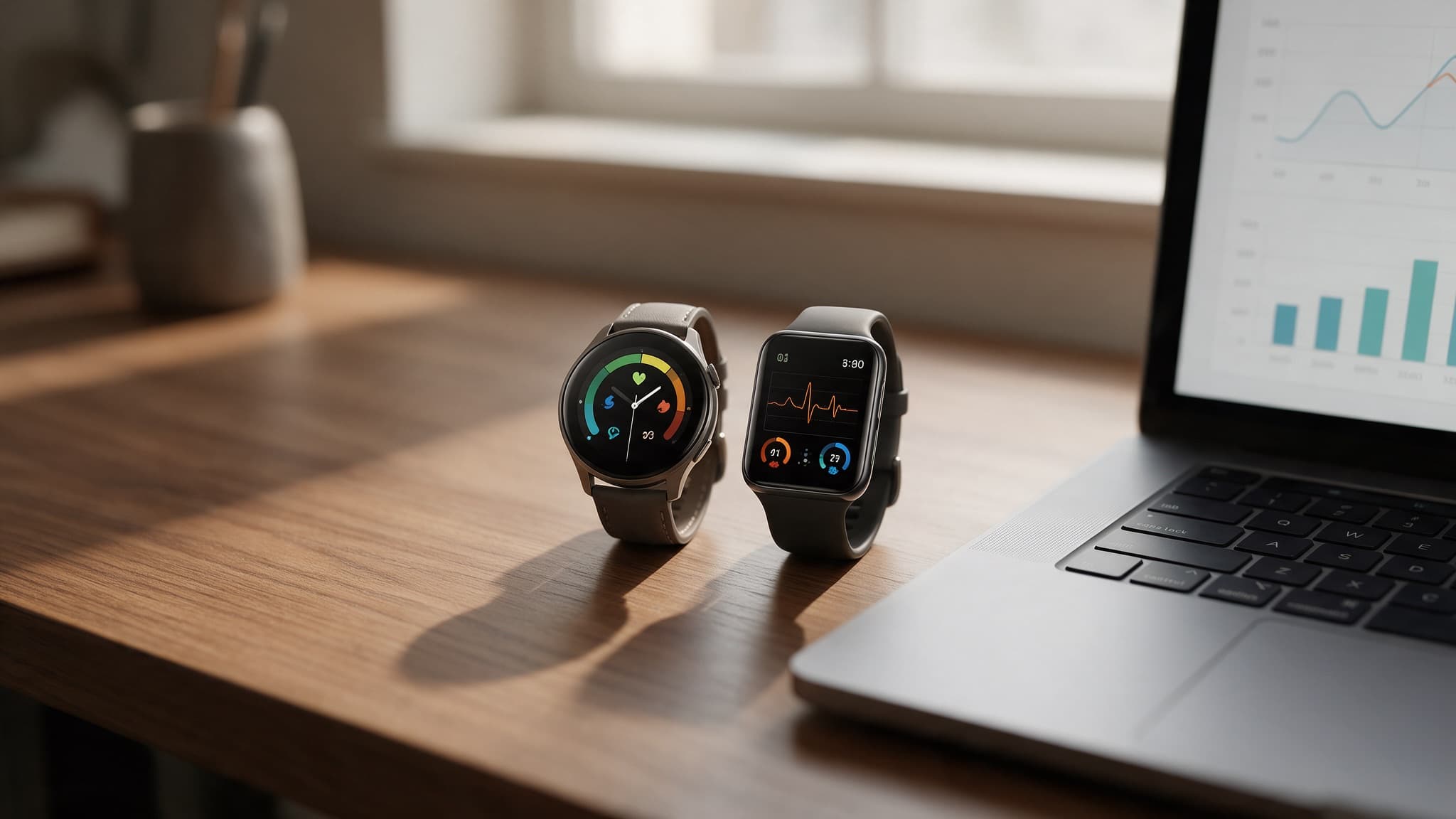
These three metrics aren't equally mature, so no single watch wins at all of them. Oura has the strongest reputation specifically for sleep tracking, helped by its comfortable ring design for overnight wear. Whoop and Oura both do well for heart rate variability measurement specifically, since it's central to what they're built around. Stress tracking is the weak link across every brand — what any watch calls a 'stress score' is actually calculated from your heart rate patterns, not a direct measurement of how stressed you actually are, and no brand's stress score has been proven against real measured stress. Apple Watch is a solid general-purpose choice across all three without leading in any single one.
Sleep, HRV and stress tracking are three metrics at three very different levels of scientific maturity, and answering 'which smartwatch tracks all three best' requires ranking each separately rather than combining them into one score. For sleep tracking specifically, Oura ranks highest, with a strong reputation and reasonable published validation for sleep duration and, to a somewhat lesser degree, sleep staging, aided by the ring form factor's suitability for comfortable continuous overnight wear. For heart rate variability specifically, Whoop and Oura both rank well, given their focus on this measurement and reasonably good published validation of their underlying HRV calculation methods, followed by Garmin. For stress tracking specifically, no current wearable ranks highly in an absolute sense, because 'stress' as marketed by any brand is typically a derived score from heart rate variability and heart rate patterns, not a direct measurement of psychological stress, and no wearable's stress score has been independently validated against actual measured stress or cortisol levels — this is the least scientifically mature of the three metrics across every brand. Apple Watch offers reasonable, general-purpose tracking across all three metrics without leading in any specific one. The honest overall answer: no single smartwatch definitively 'tracks all three best', since Oura leads for sleep, Whoop and Oura both do well for HRV specifically, and stress tracking remains an unvalidated derived score industry-wide regardless of brand.
- Sleep, HRV and stress tracking have very different levels of scientific maturity and should be evaluated separately.
- Oura has a particularly strong reputation and validation for sleep tracking specifically.
- Whoop and Oura both perform well for HRV measurement given their focus on this metric.
- Stress tracking on any current wearable is a derived score from heart rate data, not a direct measurement, and is not independently validated against actual stress levels for any brand.
- No single watch definitively leads in all three categories at once.
Rankings by metric, since no watch leads in all three
Sleep, HRV and stress tracking, ranked separately
| Metric | Top performer | Runner-up | Note |
|---|---|---|---|
| Sleep tracking | Oura | Apple Watch, Garmin | Duration tracking more reliable than detailed sleep-stage accuracy across all brands |
| HRV measurement | Whoop, Oura (roughly tied) | Garmin | Both have reasonably good published validation of their underlying calculation |
| Stress tracking | No clear leader | — | A derived heart-rate-based score industry-wide; not independently validated against actual measured stress for any brand |
Why stress tracking is the weak link
'Stress' as reported by any current consumer wearable is not a direct measurement of psychological stress — no consumer device measures cortisol or directly assesses mental state. Instead, brands calculate a stress score from heart rate variability and heart rate patterns, on the reasonable but unproven assumption that these patterns correlate with subjective stress in a consistent, individually meaningful way.
This assumption has genuine physiological basis — stress does affect heart rate variability — but the resulting consumer score has not been independently validated against actual measured stress levels (through cortisol testing or validated psychological stress questionnaires) for any current brand, which is a meaningfully different and weaker evidentiary position than exists for sleep duration or heart rate variability measurement themselves.
Frequently asked questions
What smartwatch tracks sleep, HRV and stress best?
No single watch leads in all three, since they have very different levels of scientific maturity. Oura has the strongest reputation for sleep tracking specifically. Whoop and Oura both perform well for HRV measurement. Stress tracking is the weakest metric across every brand, since it's a heart-rate-derived score not independently validated against actual measured stress for any current wearable.
Is Oura the best for sleep tracking?
It has a particularly strong reputation and reasonable published validation for sleep duration tracking, aided by the ring form factor being comfortable for consistent overnight wear, which many people find easier to tolerate than a wrist-worn device while sleeping.
Can a smartwatch actually measure my stress level accurately?
No current consumer wearable directly measures psychological stress; instead, brands calculate a 'stress score' from heart rate variability and heart rate patterns, an assumption with genuine physiological basis that has not been independently validated against actual measured stress levels for any current brand, making this the least scientifically mature of the three metrics discussed.
Is Whoop or Oura better for HRV tracking specifically?
Both perform well and are roughly comparable for HRV measurement specifically, given their central focus on this metric and reasonably good published validation of their underlying calculation methods; the choice between them often comes down to form factor preference (band versus ring) rather than a clear accuracy difference.
Should I trust my watch's stress score to manage my mental health?
It is reasonable to use as a rough personal trend indicator, but it should not be relied upon as an accurate measurement of your actual stress state, since it is a heart-rate-derived proxy that has not been independently validated against real measured stress for any brand, and it should not substitute for professional mental health support when needed.
Which is more scientifically mature: sleep duration tracking or sleep stage tracking?
Sleep duration tracking is generally more reliable across all major brands than detailed sleep-stage (light, deep, REM) tracking, which involves more complex algorithmic estimation and shows more variability in accuracy across devices and individuals compared with the simpler and more robust measurement of overall time asleep.
Keep reading
- Which wearable gives most accurate recovery and strain insights?
The related recovery-scoring comparison.
- Best AI health app for continuous heart rate monitoring.
The heart rate accuracy underlying HRV measurement.
- How to choose a smartwatch for longevity tracking?
A broader selection method covering these and other metrics.
- Free stack check
How your medicines affect HRV and sleep readings specifically.
More in Wearables & devices
- Best snoring solutions, ranked by evidence.
Mandibular advancement devices have real randomised-trial evidence for snoring and mild-to-moderate apnea; positional therapy and nasal strips rank below them.
- Which longevity tech robots offer the most accurate sensors?
Longevity robots are ranked on sensor accuracy against clinical references: validated peripherals beat camera-based fall detection and contactless vitals.
- Best longevity robots with advanced biometric monitoring sensors.
Care-programme telepresence robots rank first for biometric monitoring — validated sensors and a staffed nurse response — ahead of unvalidated consumer devices.
- How to choose longevity robots with reliable health sensors?
Choosing a longevity robot means checking each sensor's validation: attached validated devices pass; built-in contactless vitals and fall detection fail.
- High-end longevity tech robots featuring AI health sensors.
A higher price buys mobility, build quality and voice, not a validated health sensor. Enterprise telepresence robots are the only class with outcome evidence.
- What are the top-rated longevity robots for seniors?
Companion robots like ElliQ rank first for seniors, with sustained daily use and loneliness gains; PARO's best trial matched only a switched-off toy.