Whoop vs smartwatch, which optimizes performance and recovery?
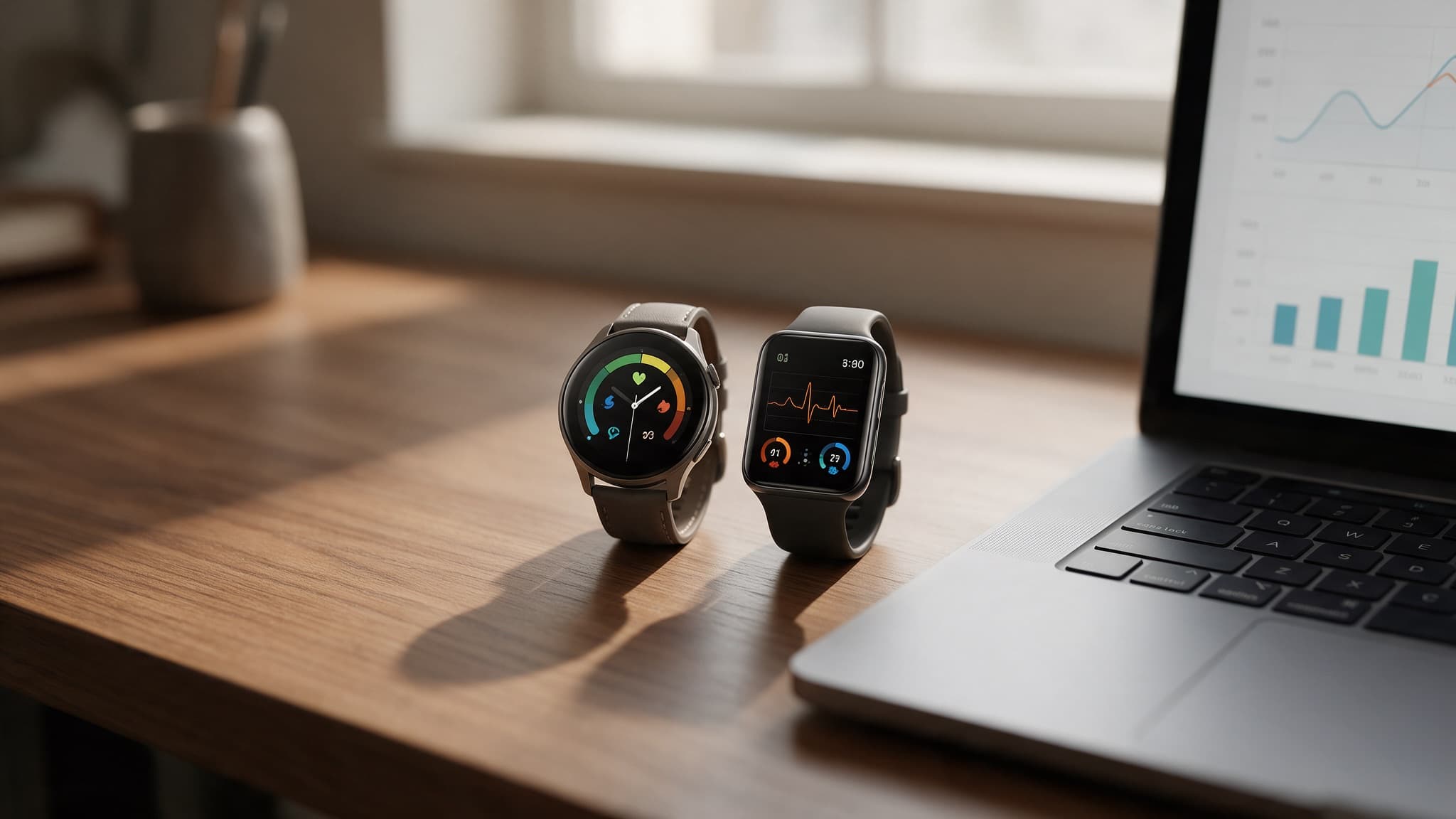
Whoop and a general smartwatch serve different needs. Whoop's screenless design, long battery life and singular focus on recovery and strain make it genuinely well-suited if that's specifically what you want to track without distraction. A smartwatch like Apple Watch or Garmin does more overall — cardiac health alerts, GPS for outdoor workouts, phone notifications, and in Garmin's case more detailed training data — but with shorter battery life and, on Whoop's part, an ongoing subscription cost that a typical smartwatch purchase doesn't have. If you're a serious athlete who wants dedicated, distraction-free recovery tracking, Whoop has a genuine edge. If you want one device that also handles cardiac safety, everyday notifications and outdoor activity tracking, a general smartwatch is the more practical single choice.
Whoop and a general smartwatch are built for different jobs, and 'which optimizes performance and recovery better' depends on how narrowly that job is defined. For someone whose primary goal is dedicated recovery and strain tracking with minimal distraction, Whoop has a genuine advantage: its screenless design removes notification distraction, its multi-day battery life supports truly continuous wear including sleep, and its entire product focus is built around this specific calculation with reasonably good published validation of its underlying heart rate variability measurement. For someone whose goals extend beyond training optimization to general health monitoring, cardiac safety, and everyday smartphone integration, a general smartwatch like Apple Watch or Garmin has genuine advantages Whoop lacks entirely: cleared cardiac monitoring features (Apple Watch, Samsung), GPS and mapping for outdoor activities, smartphone notifications and apps, and in Garmin's case, more detailed sport-specific training metrics beyond just recovery and strain. The financial model also differs meaningfully: Whoop requires an ongoing subscription for full functionality, while a smartwatch is typically a one-time purchase (with the software updates included), which matters for long-term cost comparison. For serious athletes whose primary concern is precisely tracking recovery and training strain with minimal distraction, Whoop's focused design offers a genuine edge; for people who want one device covering recovery, general health, cardiac safety and daily smartphone functions, a general smartwatch, particularly Garmin for training depth or Apple Watch for cardiac features and ecosystem integration, is the more practical single choice.
- Whoop's screenless, distraction-free design and multi-day battery genuinely suit dedicated recovery tracking.
- A general smartwatch offers cardiac monitoring, GPS, notifications and broader functionality that Whoop entirely lacks.
- Whoop requires an ongoing subscription; most smartwatches are a one-time purchase.
- Garmin offers more detailed sport-specific training metrics beyond recovery and strain specifically.
- The better choice depends on whether the goal is narrow, focused recovery tracking or broader everyday health and smartphone functionality.
Direct comparison for performance and recovery
Whoop versus a general smartwatch
| Factor | Whoop | General smartwatch (Apple Watch / Garmin) | Advantage |
|---|---|---|---|
| Focus on recovery and strain specifically | Singular, primary product focus | One feature among many | Whoop |
| Battery life for continuous wear | Multiple days | 18 hours to several days depending on brand/model | Whoop, or Garmin depending on model |
| Distraction-free design | Screenless, no notifications | Notifications, screen, apps | Whoop |
| Cardiac monitoring features | Absent | Present (cleared ECG on Apple Watch, Samsung) | Smartwatch |
| GPS and outdoor activity mapping | Requires phone pairing for full GPS features | Built-in on most models | Smartwatch (Garmin especially) |
| Sport-specific training detail beyond recovery | Limited | Extensive, especially Garmin | Smartwatch |
| Cost model | Ongoing subscription required | One-time purchase (software included) | Smartwatch, for long-term cost |
| Everyday smartphone integration | Minimal | Extensive | Smartwatch |
Frequently asked questions
Whoop vs smartwatch, which optimizes performance and recovery better?
Whoop has a genuine edge for dedicated, distraction-free recovery and strain tracking specifically, given its singular focus, screenless design and multi-day battery life. A general smartwatch like Apple Watch or Garmin offers broader functionality — cardiac monitoring, GPS, notifications, and in Garmin's case more detailed training metrics — making it the more practical single choice for most people who want recovery tracking alongside general health and everyday features.
Is Whoop's recovery score more accurate than a smartwatch's?
Whoop's singular focus gives it reasonably good published validation of its underlying heart rate variability measurement specifically, and a longer development history dedicated to this calculation, but like any brand's proprietary recovery score, it has not been independently validated against actual health or performance outcomes.
Why doesn't Whoop have a screen like a smartwatch?
The screenless design is a deliberate choice to remove notification distraction and focus the device entirely on recovery and strain data collection, viewed through a companion phone app, which some serious athletes prefer for minimizing distraction during training and daily wear.
Is Whoop worth the ongoing subscription cost compared to a one-time smartwatch purchase?
This depends on how much you value its specific, focused recovery and strain tracking versus the broader functionality (cardiac monitoring, GPS, smartphone integration) of a general smartwatch purchased once; for serious athletes prioritizing recovery tracking specifically, some find the subscription worthwhile, while others prefer the one-time cost and broader functionality of a smartwatch.
Does Garmin offer similar recovery tracking to Whoop?
Garmin's training status and body battery features are built on well-documented sports-science methodology and offer meaningful recovery-relevant data, combined with more detailed sport-specific training metrics than Whoop provides, though Whoop's singular focus and screenless design offer a different, more distraction-free experience specifically for recovery tracking.
Can I use Whoop alongside a regular smartwatch?
Some people do wear both — a smartwatch for general health, safety and everyday smartphone functions, and Whoop specifically for focused recovery and strain tracking — though this means wearing two devices and paying for both a smartwatch and Whoop's ongoing subscription.
Keep reading
- Which wearable gives most accurate recovery and strain insights?
The broader recovery-tracking comparison including chest straps.
- Are Apple Watch or Garmin better for health tracking?
The general smartwatch comparison referenced here.
- Which fitness wearable is best for long term health?
How the subscription-versus-purchase question fits a long-term view.
- Free stack check
How your medicines can affect recovery and strain readings.
More in Wearables & devices
- Best snoring solutions, ranked by evidence.
Mandibular advancement devices have real randomised-trial evidence for snoring and mild-to-moderate apnea; positional therapy and nasal strips rank below them.
- Which longevity tech robots offer the most accurate sensors?
Longevity robots are ranked on sensor accuracy against clinical references: validated peripherals beat camera-based fall detection and contactless vitals.
- Best longevity robots with advanced biometric monitoring sensors.
Care-programme telepresence robots rank first for biometric monitoring — validated sensors and a staffed nurse response — ahead of unvalidated consumer devices.
- How to choose longevity robots with reliable health sensors?
Choosing a longevity robot means checking each sensor's validation: attached validated devices pass; built-in contactless vitals and fall detection fail.
- High-end longevity tech robots featuring AI health sensors.
A higher price buys mobility, build quality and voice, not a validated health sensor. Enterprise telepresence robots are the only class with outcome evidence.
- What are the top-rated longevity robots for seniors?
Companion robots like ElliQ rank first for seniors, with sustained daily use and loneliness gains; PARO's best trial matched only a switched-off toy.