Best non-surgical regenerative medicine therapies for knee cartilage damage.
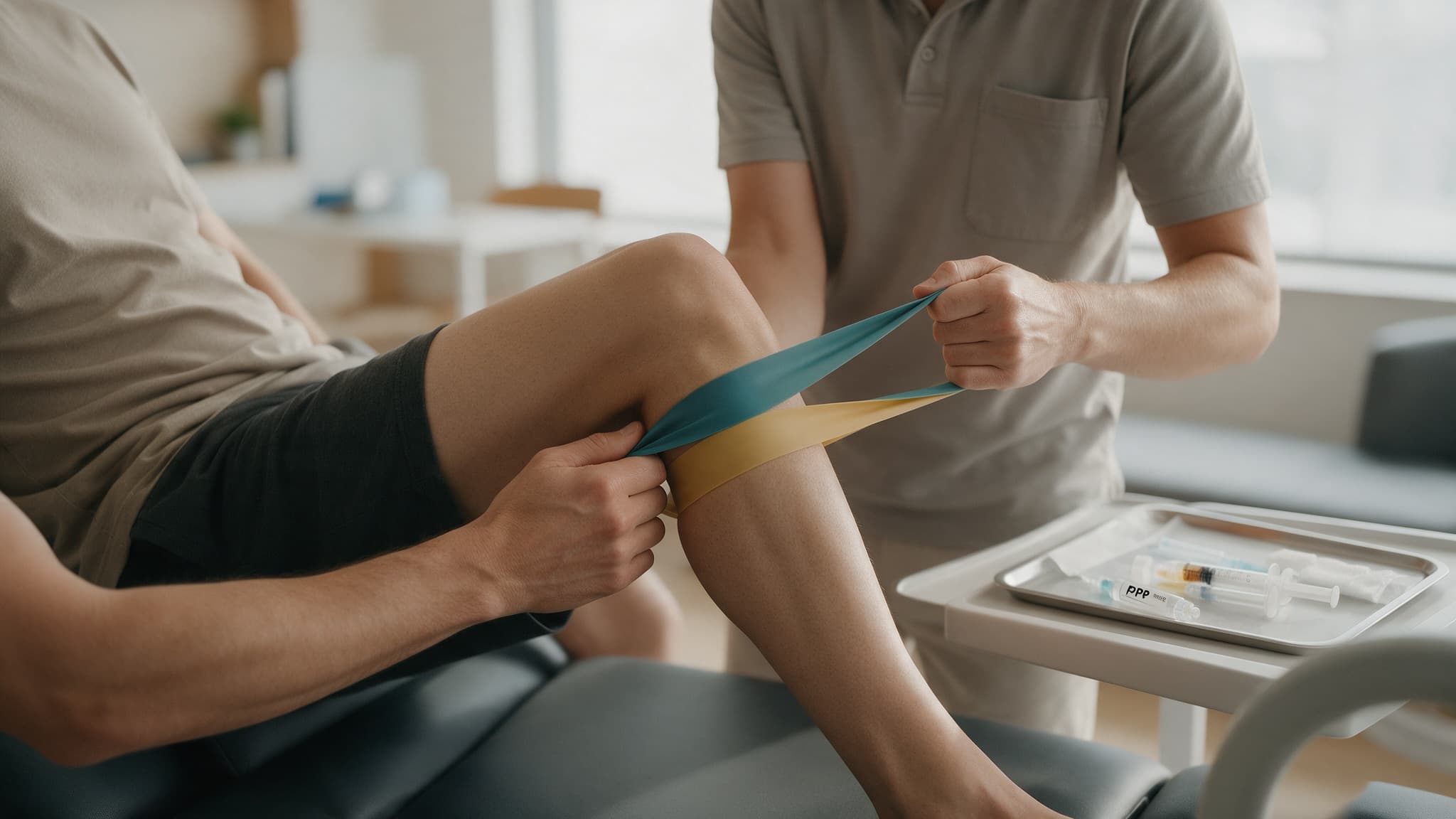
No injection regrows knee cartilage — scans in the trials show that clearly. What non-surgical treatment can do is protect and unload the cartilage you have: strengthening the thigh and hip muscles, losing weight (with semaglutide if you are obese), a brace or cane if one side is worn, and keeping active without impact overload. PRP and hyaluronic acid relieve pain modestly without changing the cartilage; repeated steroid injections make cartilage loss worse; stem-cell and exosome injections have not changed cartilage on MRI. The treatments that actually rebuild cartilage are surgical, for specific cases.
No non-surgical therapy regrows knee cartilage — MRI outcomes in the controlled trials of PRP, hyaluronic acid and cell injections show no cartilage regeneration — so the best non-surgical therapies for cartilage damage are ranked on what they actually do: protect the remaining cartilage, offload it, and relieve the pain. In that order: quadriceps and hip strengthening (reduces joint load and symptoms, the strongest evidence); weight loss including semaglutide where obesity is present (reduces load with every step and pain in a randomised trial); offloading with an unloader brace or cane for single-compartment damage; activity modification that keeps the joint moving without impact overload; PRP as a modest symptomatic adjunct with no structural effect; hyaluronic acid for brief relief; a single steroid injection for a flare, never a series, because steroids accelerate cartilage loss; and, at the bottom, bone-marrow and adipose cell injections that have not changed cartilage on MRI and exosomes with no evidence. The honest truth is that the regenerative options for cartilage are surgical — autologous chondrocyte implantation for a focal defect, osteotomy to offload a compartment — and a non-surgical programme is what protects the cartilage until, and often instead of, either.
- Cartilage has no blood supply and does not regrow from an injection; every controlled MRI study of injectables says so.
- The non-surgical therapies that help do so by protecting and offloading cartilage, not by rebuilding it — and they help a great deal.
- Steroid injections relieve pain and accelerate cartilage loss in randomised evidence; for cartilage damage specifically they are the wrong repeated choice.
- The genuine regenerative options for cartilage — MACI, osteotomy — are surgical, for defined indications, and are not what injection clinics offer.
- 'Stem cells regrew my cartilage' has not happened in a trial with an MRI.
Non-surgical therapies for knee cartilage damage, ranked
Ranked on: randomised evidence for symptoms and function in knees with cartilage damage or osteoarthritis, and — separately and explicitly — structural effect on cartilage as measured by MRI. No non-surgical therapy has a positive structural effect; the ranking is on protection, offloading and relief.
| # | Option | Verdict | Grade |
|---|---|---|---|
| 1 | Quadriceps and hip strengthening | Protects the cartilage by controlling the load; strongest evidence | GRADE AEstablished |
| 2 | Weight loss — diet, activity, semaglutide where obesity is present | Takes load off with every step; large pain reduction in a trial | GRADE AEstablished |
| 3 | Offloading — unloader brace, cane, footwear | Mechanical unloading of a single damaged compartment | GRADE BPromising |
| 4 | Activity modification — keep moving, cut the impact overload | Cartilage needs load to stay healthy, and is damaged by overload | GRADE BPromising |
| 5 | PRP injection | Modest symptom relief; no structural effect on MRI | GRADE CEarly |
| 6 | Hyaluronic-acid injection | Brief relief; no structural effect | GRADE CEarly |
| 7 | A single steroid injection for a flare — never a series | Relief now; cartilage cost with repetition | GRADE CEarly |
| 8 | Glucosamine, chondroitin, collagen supplements | Null or tiny trials; no structural effect | GRADE DInsufficient or unsafe |
| 9 | Bone-marrow, adipose or cultured cell injection | No cartilage change on MRI; inconsistent symptoms; not approved | GRADE DInsufficient or unsafe |
| 10 | Exosomes and IV cell products | No evidence of any kind | GRADE DInsufficient or unsafe |
- 01
Quadriceps and hip strengthening
GRADE AEstablishedProtects the cartilage by controlling the load; strongest evidenceStronger quadriceps and hip abductors reduce joint loading and improve pain and function in knee osteoarthritis across dozens of trials; weak quadriceps predict progression. It does not regrow cartilage; it is the most effective way to keep what is there working. Twelve weeks supervised, then for life.
- 02
Weight loss — diet, activity, semaglutide where obesity is present
GRADE AEstablishedTakes load off with every step; large pain reduction in a trialEach kilogram lost reduces knee load several-fold per step and slows structural progression in cohorts; semaglutide produced substantial weight loss and a large reduction in knee osteoarthritis pain in a randomised trial in people with obesity. Cartilage protection through unloading, with the strongest drug evidence in the field.
- 03
Offloading — unloader brace, cane, footwear
GRADE BPromisingMechanical unloading of a single damaged compartmentA valgus unloader brace shifts load away from a worn medial compartment and improves pain and function in trials; a cane in the opposite hand cuts knee load substantially. For cartilage damage confined to one side of the knee, the most direct non-surgical protection available.
- 04
Activity modification — keep moving, cut the impact overload
GRADE BPromisingCartilage needs load to stay healthy, and is damaged by overloadCartilage is nourished by cyclical loading — cycling, swimming, walking — and damaged by repetitive high-impact overload on a compromised surface. Continuing to move while reducing impact and volume is evidence-based protection; rest is not.
- 05
PRP injection
GRADE CEarlyModest symptom relief; no structural effect on MRIModest, inconsistent pain benefit at six to twelve months in knee osteoarthritis; the largest placebo-controlled trial found no difference in pain or in cartilage volume on MRI at twelve months. A symptomatic adjunct; not a cartilage therapy.
- 06
Hyaluronic-acid injection
GRADE CEarlyBrief relief; no structural effectSmall, short-lived symptomatic benefit; no evidence of cartilage protection or regrowth despite the 'lubrication' story. Safe.
- 07
A single steroid injection for a flare — never a series
GRADE CEarlyRelief now; cartilage cost with repetitionA randomised trial of steroid injections every three months for two years found greater cartilage volume loss than saline, with no lasting pain benefit. For a knee whose problem is cartilage, repeated steroids are the wrong choice; one injection to break a flare that blocks the strengthening programme is defensible.
- 08
Glucosamine, chondroitin, collagen supplements
GRADE DInsufficient or unsafeNull or tiny trials; no structural effectLarge independent trials found glucosamine and chondroitin no better than placebo for knee osteoarthritis pain; structural claims are unsupported; oral collagen has no cartilage evidence. Harmless, mostly, and useless for cartilage.
- 09
Bone-marrow, adipose or cultured cell injection
GRADE DInsufficient or unsafeNo cartilage change on MRI; inconsistent symptoms; not approvedThe better-controlled trials of mesenchymal cell injection for knee osteoarthritis show no cartilage regeneration on MRI and no consistent advantage over placebo on pain; no product is approved. The specific promise — regrown cartilage — is the specific thing the trials did not find.
- 10
Exosomes and IV cell products
GRADE DInsufficient or unsafeNo evidence of any kindNo controlled trials for cartilage or any knee outcome, unverified composition, regulator warnings, documented infections. Refuse.
Where cartilage regeneration actually is
Non-surgical protection versus surgical regeneration
| Goal | Non-surgical options | Structural effect | Surgical options with evidence | For whom |
|---|---|---|---|---|
| Protect remaining cartilage | Strengthening; weight loss; offloading; activity modification | Slows loss; no regrowth | — | Everyone with cartilage damage |
| Relieve pain | Topical NSAID; PRP (modest); HA (brief); one steroid for a flare | None | — | Adjuncts to protection |
| Repair a focal defect | None | None | Autologous chondrocyte implantation (MACI); microfracture for small lesions; osteochondral grafting | Under ~50, defined full-thickness defect, usually after injury |
| Offload a worn compartment permanently | Brace; cane | Slows loss | High tibial osteotomy | Younger, active, malaligned, single-compartment |
| Replace failed cartilage | None | None | Partial or total knee replacement | Function failing despite the programme |
Frequently asked questions
What are the best non-surgical regenerative therapies for knee cartilage damage?
None regrows cartilage — MRI outcomes in the controlled trials of PRP, hyaluronic acid and cell injections show no regeneration — so the best non-surgical therapies are the ones that protect and unload it: quadriceps and hip strengthening, weight loss with semaglutide where obesity is present, an unloader brace or cane for single-compartment damage, and activity modification. PRP and hyaluronic acid relieve symptoms modestly; repeated steroids accelerate cartilage loss; cell and exosome injections have no structural effect.
Can stem cell injections regrow knee cartilage?
Not in any controlled trial with an MRI. The better-controlled trials of bone-marrow, adipose and cultured cell injections for knee osteoarthritis show no cartilage regeneration on imaging and no consistent advantage over placebo on pain; no product is approved. The specific promise is the specific thing the trials did not find.
Does PRP repair cartilage?
No. PRP gives modest, inconsistent pain relief at six to twelve months in knee osteoarthritis; the largest placebo-controlled trial found no difference in pain or in cartilage volume on MRI at one year. It is a symptomatic adjunct, safe and unstandardised, not a cartilage therapy.
Are steroid injections bad for cartilage?
Repeated ones, yes: a randomised trial of triamcinolone injections every three months for two years found greater cartilage volume loss than saline with no lasting pain benefit. A single injection to break a flare that is stopping your strengthening programme is defensible; a series is the wrong choice for a knee whose problem is cartilage.
What actually regenerates knee cartilage?
Surgery, for defined indications: autologous chondrocyte implantation (MACI) for a full-thickness focal defect in a younger patient, usually after injury, with randomised evidence over microfracture; osteochondral grafting for some lesions; and osteotomy to permanently offload a worn compartment in a younger, active, malaligned knee. None of these is what injection clinics offer, and none treats diffuse osteoarthritis.
Do glucosamine, chondroitin or collagen help cartilage?
Large independent trials found glucosamine and chondroitin no better than placebo for knee osteoarthritis pain, structural claims are unsupported, and oral collagen has no cartilage evidence. They are mostly harmless and useless for cartilage; the money is better spent on a physiotherapist.
Keep reading
- What is the most effective regenerative medicine for knees?
The knee by diagnosis, including MACI.
- Which regenerative medicine options help avoid joint replacement?
Osteotomy, offloading and when to stop delaying.
- Regenerative medicine: what is approved, what is in trials, and what is only being sold
The full evidence ledger, including the MSC knee trials.
- Best longevity workout routine for healthy aging adults
The strengthening that protects the cartilage.
More in Regenerative medicine
- Which regenerative medicine treatments work best for joint pain?
Exercise therapy beats every regenerative option for joint pain; GLP-1 drugs, PRP, and stem-cell injections rank next by evidence, not marketing.
- What is the most effective regenerative medicine for knees?
Exercise, weight loss and MACI rank above PRP, hyaluronic acid and cell injections on randomised evidence, split by osteoarthritis versus cartilage injury.
- Which regenerative medicine options help avoid joint replacement?
Exercise, weight loss, and semaglutide delay joint replacement more than any injection, ranking above osteotomy and MACI — stem-cell injections show no benefit.
- What regenerative medicine is best for chronic back pain?
Exercise and cognitive-behavioural approaches beat every injection for chronic back pain in trials, ranking above radiofrequency ablation and intradiscal PRP.
- Which regenerative medicine therapy is safest for arthritis patients?
PRP is the safest regenerative injection for arthritis, but exercise, weight loss, and topical NSAIDs rank safer still, and stem-cell injections rank last.
- Best regenerative medicine treatments for osteoarthritis relief without surgery.
Supervised exercise gives the largest, most durable relief for osteoarthritis without surgery, ahead of weight loss with semaglutide, topical NSAIDs and PRP.